
AV Lounge

High Fidelity Audio

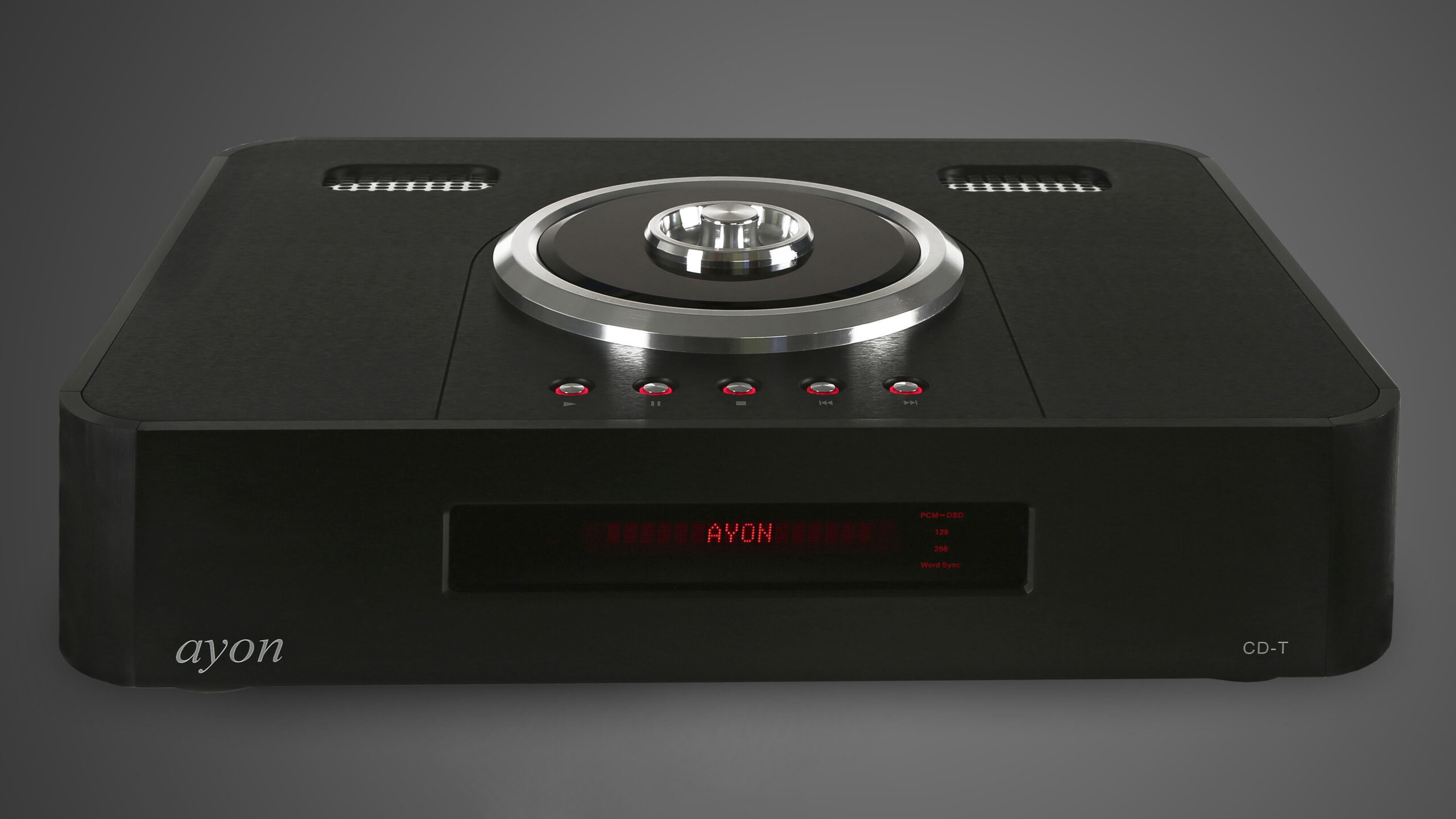
CD-T II

Ayon Audio · CD

CD-T II

A reference top-loading transport pairing a Philips Pro mechanism with tube buffering.

The CD-T II represents an extensive, complete retreading of Ayon Audio's acclaimed optical drive architecture, built to redefine what is achievable from the Red Book format. Hand-assembled in Austria, this single-minded machine discards integrated digital conversion entirely to focus solely on flawless optical data retrieval and transmission. By separating mechanical tracking from the digital-to-analog stage, it acts as an absolute reference foundation for high-end separate component systems. Positioned at the definitive apex of the brand's physical playback fleet, the CD-T II is engineered around a heavily modified, suspended top-loading drive module. The incoming bitstream is treated by a highly unusual dual digital tube buffer using a premium 6H14 dual triode operating deep within the megahertz range. This configuration minimizes impedance mismatching and prevents cable-induced reflections before the raw signal ever reaches an external processor. Sonically, the CD-T II delivers a staggeringly vivid, clear presentation that feels remarkably detached from the traditional digital domain. It renders complex acoustic lines and real venue ambiance with a breath-taking level of resolution, tracking fast-moving micro-dynamics with absolute poise. The timing is exceptionally precise and coherent, resulting in an organic musical flow that lets traditional silver discs rival the liquidity of reference open-reel master tapes.

Key Features

01

Legendary Philips CD-Pro II Drive

Utilizes the highly sought-after, reissued cast-metal Philips Pro II transport mechanism, widely recognized by high-end designers as one of the finest sounding CD mechanisms ever built.

02

6H14 Tube Buffered Output

Employs an innovative 6H14 cathode follower tube configuration acting as an impedance converter, ensuring the downstream digital-to-analog converter receives an uncompromised square wave.

03

One-Picosecond Clocking Array

Driven by a custom-engineered, ultra-low-noise master clocking engine that controls jitter artifacts down to a virtually non-existent single picosecond threshold.

04

Isolated Twin R-Core Transformers

Equipped with two separate, fully insulated R-core power transformers to isolate the power grids of the sensitive digital clock circuitry from the high-draw mechanical drive motor.

05

Optimized Two-Part Enclosure and Puck

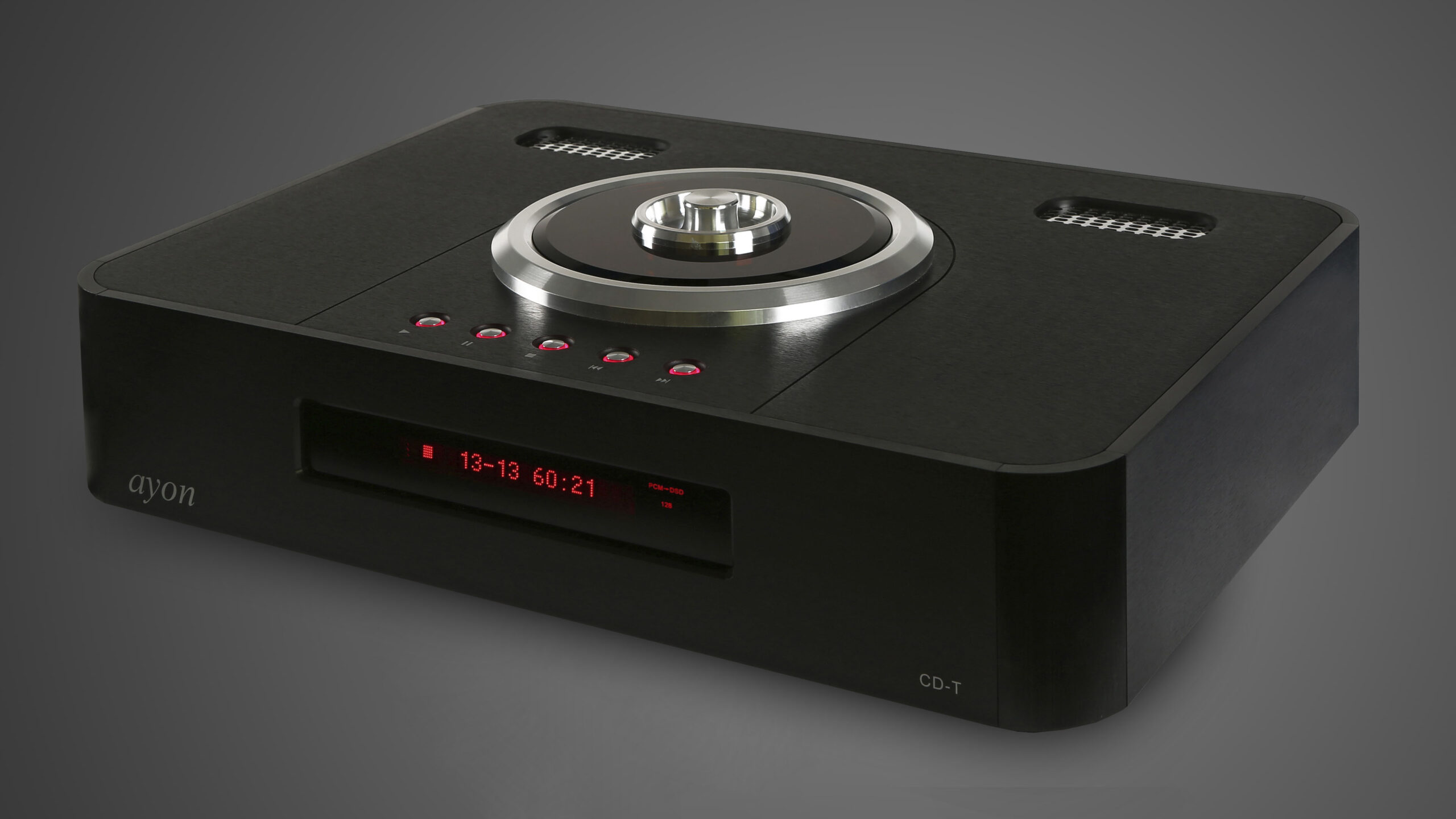
Features a redesigned two-piece top plate consisting of a separate precision-weighted magnetic puck to damp disc resonance and a dark acrylic sliding vault cover.
The Impedance Matching Strategy

Chapter 01

The Impedance Matching Strategy
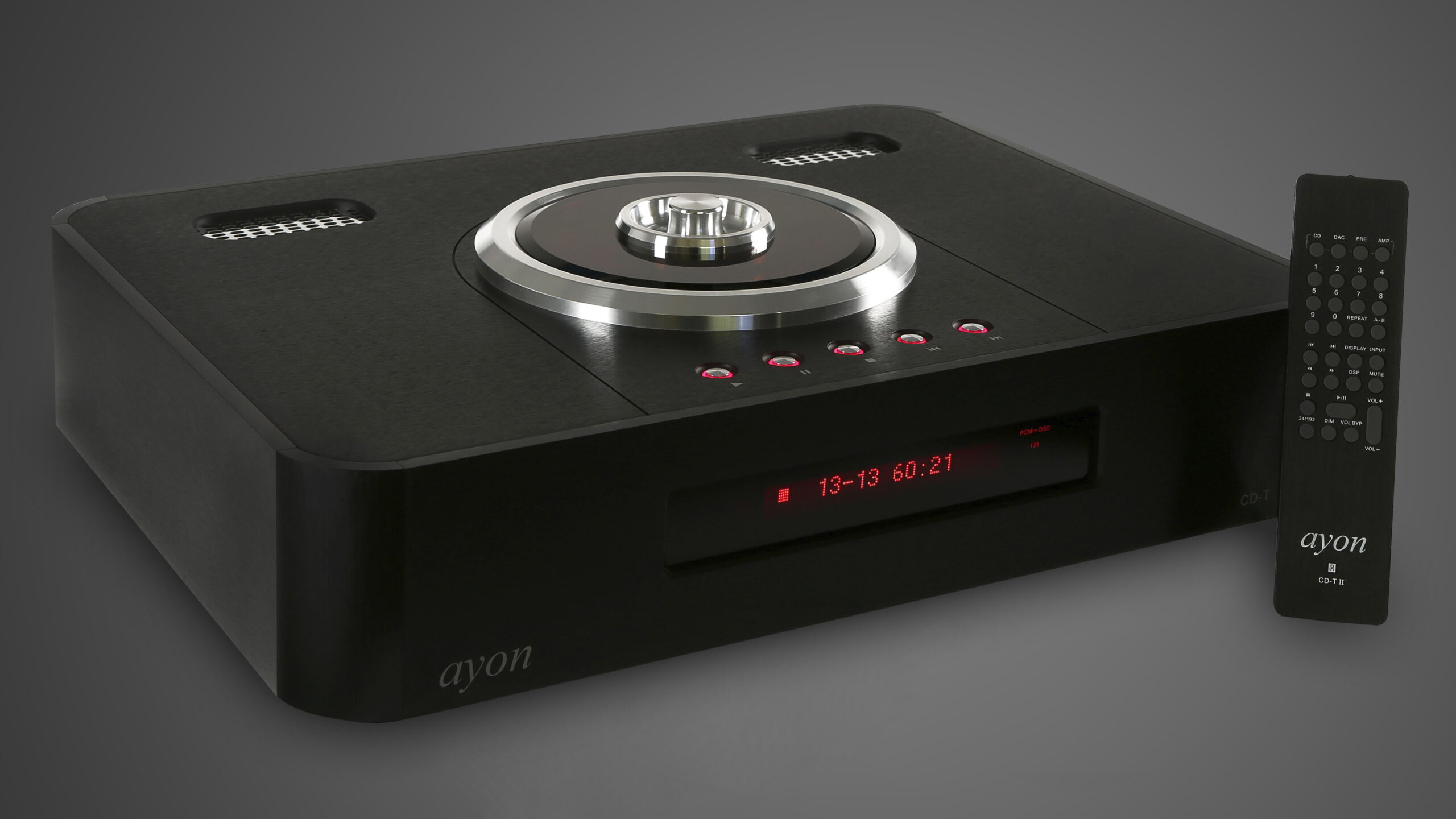
Ayon engineers identified a frequent bottleneck in high-end systems: the chip responsible for driving the S/PDIF output is often too weak to push signals down long cables without deformation. The CD-T II solves this problem by inserting a 6H14 tube buffer to handle the signal propagation. The output chip only needs to drive the highly receptive grid of the vacuum tube, which acts as a powerful impedance converter to stabilize the signal against external radio-frequency and electromagnetic interference.
Galvanic Isolation and Pure Paths

Chapter 02

Galvanic Isolation and Pure Paths
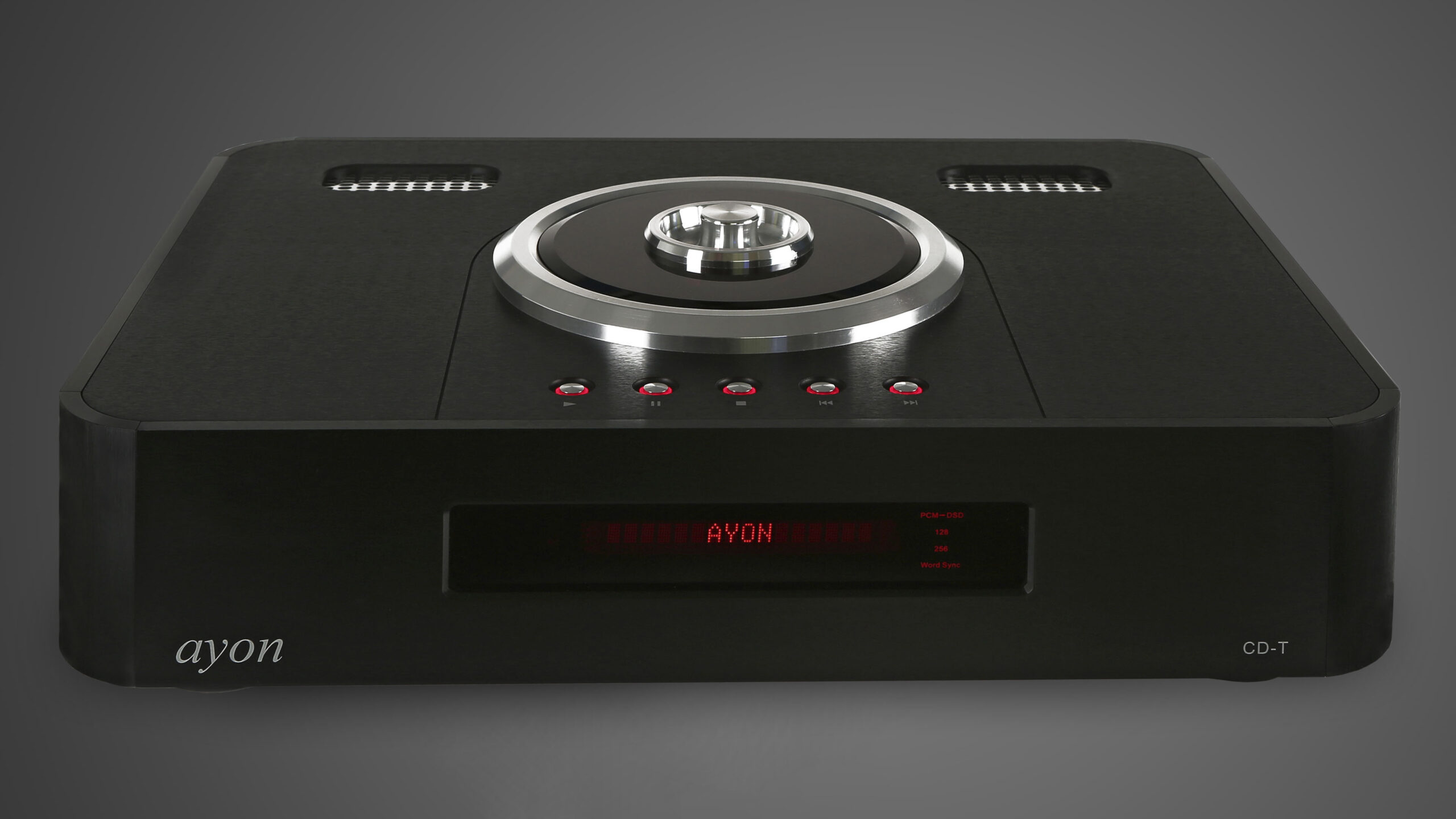
Every single digital output on the rear panel of the CD-T II—including the S/PDIF, BNC, I2S, and AES/EBU connections—is completely galvanically insulated from the others. This painstaking layout prevents ground loops and noise bleeding between connected components. Furthermore, a rear-mounted toggle switch allows owners to deactivate the tube-buffered output entirely, changing the internal routing to a transistorized buffered architecture to achieve an exact system match.
Listening Notes

Chapter 03

Listening Notes

Housed inside a massive, non-magnetic aircraft-grade aluminum chassis with an integrated soft-start warming sequence, the CD-T II uncovers unexpected reserves of data buried deep within ordinary recordings. It reveals the authentic, complex timbres of acoustic instruments and captures the subtle physical energy of a live performance with spooky accuracy. The background stays absolutely silent, granting soundstages an expansive dimension where notes emerge and vanish without artificial overhang.

Specifications

Frequency response20 Hz – 50 kHz +/- 0.3 dB
Intrinsic Jitter1 picosecond RMS
Tube complement6H14 (Digital output signal buffer)
Dynamic range> 120 dB
Digital output impedance75 Ohms S/PDIF (RCA), 110 Ohms AES/EBU (XLR)
Dimensions (H × W × D)12 × 48 × 36 cm
Weight18 kg
Conversion Rate16-44.1 or PCM/DSD 128
Digital OutputBNC, I2S
Total harmonic distortion @ 1kHz< 0.001%